Weekend Box Office, 22-24 April 2011.

Hi All.
In an effort to be a little more user-friendly and to up the frequency of my posts, I’m going to start posting weekend box office tallies and other bits and bobs of film news. This will come in addition to the essays and reviews that I’ve been posting on a semi-regular basis these last few months.

Last weekend’s Takes:
Title: Studio: Weekend: Total:
Rio Fox $26.80M $81261000.00M
Madea’s Big Happy Family LGF $25.75M $25.75M
Water For Elephants Fox $17.50M $17.50M
Hop Universal $12.46M $100.50M
Scream 4 W/Dimens $7.15M $31.16M
African Cats BV $6.40M $6.40M
Soul Surfer TriStar $5.60M $28.66M
Insidious FilmDistrict $5.38M $44.18M
Hanna Focus $5.28M $31.72M
Source Code Summit $5.06M $44.66M

Posted in Box Office Tallies, Film News | Leave a comment

A Few Thoughts On Star Wars.

Name: Star Wars
Release Date: 1977
Director: George Lucas
Writer: George Lucas

Cast:
Mark Hamill: Luke Skywalker
Harrison Ford: Han Solo
Sir Alec Guinness: Obi-Wan “Ben” Kenobi
Carrie Fisher: Princess Leia Organa
Peter Cushing: Grand Moff Tarkin
Anthony Daniels: C-3PO
Kenny Baker: R2-D2
Peter Mayhew: Chewbacca
David Prowse: Darth Vader

Run-Time: 121 mins.
Studio: 20th Century Fox

Writing in the English newspaper The Guardian on Tuesday, Gary Kurtz, confesses that there once was a time he thought that a little science fiction flick he made with this guy named George Lucas was just a movie.

Star Wars, just a movie?

If you’re a filmgoer of a certain age, or, more likely one of the countless millions who have thrilled to the adventures of Luke Skywalker, Han Solo and Princess Leia since they hit the silver screen 34 years ago, this is kind of like saying the World Series is just a baseball game. Or “Moby Dick” was just some book.

But Kurtz, who acted as producer on the original trilogy (or is it Trinity?), confesses in The Guardian that he and Lucas were just trying to make a movie all those years ago — not a pop culture juggernaut:

“When George Lucas and I began planning the first film, we had no idea what it would become; the kind of devotion it would attract. We planned to make this film that would capture the feel of the Flash Gordon serials of the 1930s, which we had seen on TV in the early-60s.

When it started to steamroll into this huge phenomenon where people would go to the theatre to see it six times in one week, we were, at first, a little puzzled. The crossover from the sci-fi audience to mainstream filmgoers was truly surprising.

We soon realized that we had found a niche. Star Wars arrived in cinemas when a lot of science-fiction was gloomy and post-apocalyptic. There hadn’t really been a hit movie designed to thrill the soul about the prospect of outer space as the final frontier since Forbidden Planet in 1955 – this was a few years before the first Star Trek movie, remember.”

In the dawn of the 1990s, when the Big Three networks still used to show studio films on Sunday nights, and not the exploits of maladjusted people desperate for the spotlight, “Star Wars” was shown on CBS.

As I recall, this was the film’s network television debut — when that kind of thing used to still count for something. And before the film was screened, they aired a documentary about the history of the movie.

In one pivotal scene, the interviewed filmgoers outside faceless movie theater in some faceless suburb somewhere. In turn, each admitted that they’d seen “Star Wars” 50 times, or 75 times or 100 times.

I saw myself in them: By the age of 21, I’d seen the first film more than 100 times. My friends and I, who were 13 by the time “Return of the Jedi” hit the theaters in 1983, felt like the movies belonged to us.

We owned the toys. We’d reenacted key scenes on the playground — each of us dueling over who’d get to be Luke or Han, and, thus win the attentions of the 3rd grade girl drafted in to play Leia.

We felt the darkness that permeated the second film, 1980’s “The Empire Strikes Back,” and still the series’ strongest entry.

And if you mention Carrie Fisher and her solid gold bikini in “Jedi,” you will still get an appreciative grin and the hormones of men in their 40s — each with jobs, wives, mortgages and children — will fire at pubescent levels. Some of us — if we were very lucky — may also have convinced past girlfriends or wives to don the iconic outfit.

And when the original movies were reissued in 1997 with added footage, we lined up and plunked down our $6 to see them. The extra footage brought some enjoyment — the exploding Death Star at the end of “Star Wars” was particularly vivid. But in a lot of ways, it was like meeting an old girlfriend and finding she’d had a ton of plastic surgery done. She was beautiful without it, and the newly tightened skin looked artificial.

The first generation of fans held our breath when Lucas announced the release of the long-awaited prequels. We rushed to the theaters to see “The Phantom Menace,” only to learn that one of the greatest pop culture epics of all time had been sparked by a dispute over tax policy. The only way it could have been more boring was if the fight between good and evil had been caused by a dispute over a zoning variance.

We were also horrified to find that that the living embodiment of all evil, Darth Vader, wasn’t much more than a spacebound Goth who’d apparently listened to a few too many My Chemical Romance albums.

So while it may have been true that Gary Kurtz and George Lucas were just trying to make a movie in 1975, when they set out to make the first “Star Wars” film, by 1997, nothing could have been further from the truth.

A quarter of a century later, Lucas was the possessor of a property worth incalculable billions of dollars. And that second triptych of movies felt less like a tyro filmmaker’s efforts to recapture the magic of Hollywood serials of his youth, and more like the cynical machinations of a tycoon who knew he had a core audience that would eagerly lap up any crumbs he chose to feed them. He also, no doubt knew, that the horrid Jar-Jar Binks would move a ton of merch.

Last fall came word that Lucas intends to reissue all six films, starting with Phantom Menace and ending with Jedi, in 3-D, starting in 2012.

Assuming Lucas re-releases the films at a rate of one per-year, I’ll be 48 years old by the time “Jedi” hits my local multiplex.

That’s a galaxy far, far away from the 7-year-old boy who saw “Star Wars” in a stuffy theater in suburban Connecticut during the blazingly hot summer of 1977.

My daughter will be on the cusp of young womanhood by then. And if we go to the movies together — and I hope we will — I can’t help but wonder if she will see the same things I saw in them four decades ago.

Will she feel that same sense of derring-do? Will she feel the hot sun of Tattooine on her face? Will she hold her breath when Han Solo is frozen in carbonite?

Or will she react like Lucas and Kurtz as young men — will it just be a movie churned out to make a buck and then forgotten as soon as the closing credits roll?

Posted in action, Golden Age of Cinema, Our Films, Ourselves, Sci-Fi | Leave a comment

The Way We Watch Movies Now.

Can You Remember …
… the last time you went to see a movie in the theaters?

I can. It was earlier this year, and my wife and I took our five-year-old daughter to see “Tangled” — in 3-D, no less — at the cineplex up the street.

It was a late-afternoon show on a weekday and my family had the stadium-sized auditorium all to ourselves. It was my daughter’s introduction to movie-going. And as we sat there sharing popcorn and laughing in the darkness, with animated images flickering around us, I wouldn’t have had it any other way.

But, more and more, our experience is becoming the exception rather than the rule.

Writing in The New York Times today, film critic Mahnola Dargis takes stock of the different ways that people consume entertainment these days and concludes, inevitably, that there aren’t as many butts in the seats anymore as there used to be.

Here’s the part worth noting:

“New digital technologies have transformed not only how movies are shot, processed, edited, distributed and exhibited, but also how they are watched. And this has altered our moving-image world in ways that, because we’re in the midst of all this change, are difficult to comprehend. What we do know is that for much of the 20th century when we talked about movies, we meant glorious if sometimes scratched bigger-than-life images flickering on theater screens that we watched with other people and, when the next attraction rolled in, were gone, maybe forever. Now we watch digital content on various machines, armed with the new consumer confidence that everything is a click away.”

Guilty as charged, Ms. Dargis.

These days, if I see a movie in a theater, it’s with four of my buddies and the occasion is the release of Hollywood’s newest comic book flick.

The gaudy spectacle of exploding robots, flying fists and Megan Fox, running, in a ripped t-shirt (preferably in slow-motion) is perfectly suited for that giant screen, to be shared in the intimacy of perfect strangers.

And with four of your buddies, when you don’t have to worry about your wife or girlfriend slapping you for enjoying too much the sight of Megan Fox running — preferably in slow motion.

But if I really want to sit and *watch* a movie, often with my wife, sometimes not — as is the case with the films I write about on this blog — then I’m in my living room watching them on TV, or in my home office watching them stream from my new iPad.

There, I can concentrate and not worry about the young couple down the row from me making too much noise. I don’t have to glare at the fella behind me who’s kicking my seat. And I don’t have to ask the guy in front of me to please take his cell-phone conversation out into the hall (and this even after the warning about silencing cell phones and pagers has already blared from the screen at THX levels of volume).

At home, I can rewind a scene in “Casablanca” if I miss the nuance of a line just uttered by the incomparable Ingrid Bergman. And I can pause the film if, as is so often the case, my daughter is asking for one more cuddle from the stairs.

Of course, this wasn’t always the case. As I’ve noted elsewhere in these pages, I spent most weekends in my twenties at the movies, taking in everything from the first installment of “Species” to Edward Burns’ debut in “The Brothers McMullen.”

My moviegoing tailed off in my thirties as my disposable income went to other things — planting and mowing my new yard, paying for things around the house and, of course, baby formula by the caseload.

In her Times’ piece, Dargis makes the entirely credible point that we don’t need to be in a theater in the company of strangers if we want to see a movie. Now, all we have to do is fire up our laptops or smartphones.

And she’s right — to a point.

Maybe I’m getting older and more picky, but I can also trace the decline in my moviegoing to a decline of films in the theaters that I actually feel like I’m getting my money’s worth to see.

Given the choice between spending $50 on three tickets to a 3-D movie, with popcorn and snacks — and, yes, that’s how much it actually cost — and spending $50 on just about anything else in this economy, I know where my dollar is going to land.

I know movies are more expensive than ever to make and thus have to make tons more at the box office just to break even. But it seems to me that Hollywood must have a certain contempt for its audience if it expects them to pay those sorts of prices for movies that will be out on DVD or will be available on-demand through cable TV in a matter of weeks or months after they leave the theaters.

What’s plaguing Hollywood is the same thing that’s plaguing the music business: there’s more product, and some of it is even worthwhile, but people don’t want to pay those kinds of prices.

And until, or unless, the economy rebounds, they won’t. And that means more 4:30 p.m. viewing experiences of the sort my family and I had and less of the communal movie-going experience a lot of us remember from when we were growing up.

Posted in Golden Age of Cinema, Our Films, Ourselves | Leave a comment

Robin Hood (USA, 2010)

Name: Robin Hood
Release Date: 2010
Director: Ridley Scott
Writers: Brian Helgeland (screenplay); Brian Helgeland, Ethan Reiff and Cyrus Voris (story)

Cast:
Russell Crowe: Robin Longstride
Cate Blanchett: Marion Loxley
Max von Sydow: Sir Walter Loxley
William Hurt: William Marshal
Mark Strong: Godfrey
Oscar Isaac: Prince John
Danny Huston: King Richard The Lionheart
Eileen Atkins: Eleanor of Aquitaine
Mark Addy: Friar Tuck
Matthew Macfadyen: Sheriff of Nottingham
Kevin Durand: Little John
Scott Grimes: Will Scarlet
Alan Doyle: Allan A’Dayle
Douglas Hodge: Sir Robert Loxley
Léa Seydoux: Isabella of Angoulême

Run-Time: 140 mins.
Studio: Universal/Imagine Entertainment

Let’s face it, for a lot of us there’s only one Robin Hood.

America was in the grips of The Great Depression when Errol Flynn, a glint in his eye, a mischievous smile playing across his full mouth, galloped across the screen in “The Adventures of Robin Hood” in 1938.

In his joyous fights with Basil Rathbone’s cartoonishly evil Sir Guy of Gisbourne, Flynn’s Robin of Locksley gave moviegoers an escape from the hardship of the times and offered them a none-too-subtle reminder that the very rich who’d plunged the nation into financial ruin might someday get theirs.

Filmmakers of all stripes have tried to capture the mythic bandit of Sherwood Forest in the seven decades since Flynn and Olivia De Havilland’s Maid Marian first exchanged furtive glances.

Sean Connery took a whack at the role, bringing a rugged charm to a midlife Robin in “Robin and Marian” in 1976.

The less said about Kevin Costner’s now-you-hear-it-now-you-don’t English lilt in 1991’s “Robin Hood, Prince of Thieves” the better — though that movie did boast the scenery-devouring Alan Rickman as the deliciously villainous Sheriff of Nottingham and a cameo from a still-virile Connery as King Richard.

Through dozens of film versions — including a BBC-America version that felt at times like “Dawson’s Creek, The Sherwood Forest Edition” — it was Flynn’s Robin who remained the touchstone.

It tells you all you need to know that Mel Brooks chose to send up the classic original in 1993’s “Robin Hood: Men in Tights,” and not one of the faceless versions that came before.

Like all of our enduring legendsKing Arthur, Robin Hood, James Bond and even Batman — every generation reinterprets its myths to make sense of its own time and to provide some meaning to current travails.

So what to make of the 2010 film version that reunited Australian actor Russell Crowe with director Ridley Scott for the first time since they tackled another enduringly mythic period: Ancient Rome in 2000’s “Gladiator?”

Stuck with a character so freighted with baggage, Scott and Crowe do the only thing they can do: they rip Robin (here a common archer in the army of Richard the Lionheart) down the floorboards, and set him at the very beginning of his career.

That means there’s no rivalry with the Sheriff of Nottingham (Macfayden), who’s so incidental to the plot that he might as well not even be in the movie. Nor is there even anyone called Guy of Gisbourne.

And the evil King John (Isaac) is less a tyrannical ruler than a petulant adolescent who’s spent his life in the shadow of his towering elder brother Richard. And when circumstances catapult him to the throne, he behaves like anyone hopelessly out of their depth and becomes ridiculously arrogant. Though in reality, one suspects he’s terrified by the burden he’s assumed.

The usual baddies dispensed with, we’re left with someone named Godfrey (Strong), a confidante of King John, who, for reasons that really never become clear, has decided to turn his back on England and ally himself with the king of France to capture the throne for himself. Or maybe it’s to give the throne to France. Or maybe it’s to …. Ohhhh … who the hell knows or cares what motivates him?

What the viewer mostly knows is that Godfrey is bald and scowly and that there will almost certainly be a dramatic confrontation with Robin in the film’s final act.

And what of Robin? Well, he’s made it back to England after warring in France and is hanging out in Nottingham, where he’s vowed to return the sword of the now-dead Robert Loxley to his father. Did we mention King Richard is dead as well?

Robin is accompanied on his journey by the embryonic Merry Men — Little John (Durand), Will Scarlet (Grimes) and Alan A’Dayle (Doyle) — all three lusty and funny tough guys who are more vividly realized in their brief moments of screentime than some of the marquee players.

In short order, Crowe’s Robin agrees to a request from the aged Sir Walter Loxley (Von Sydow) impersonate the dead Robert so that King John won’t make a grab for the family’s land. This is because Robert left no male heirs, only his widow, Marian (Blanchett).

It’s all faintly ridiculous and contrived. But it does set up the classic, mismatched Hepburn/Tracy relationship that you just know will end with Robin and Marian living happily ever after. That is, as soon as they vanquish the invading French. And after Robin inevitably kills the evil Godfrey with a well-placed arrow-shot.

We’d be remiss if we didn’t offer a word or two about the luminous Blanchett, whose piercing blue eyes convey a quiet strength that fairly knocks the viewer back in their seats.

Having spent much of her married life waiting for her husband to return from The Crusades, one gets the sense that Marian would do fine without a mate, though the circumstances of the time force her to find one.

And really, the women are the revelation of this film. It’s the aged Eleanor of Acquitaine (Atkins) — Richard’s widow and John’s mother — who tries to get the young ruler to pull his head out of his backside and assume his royal role.

And in a brief scene, John’s wife, the French princess Isabella of Angoulême (Seydoux), risks her own life to reveal Godfrey’s treachery to her husband. There’s a moment of unbelievable courage as Isabella holds a dagger to her quite lovely sternum, offering her husband a seemingly easy way to deal with what he’s just learned.

All three women are pillars of strength compared to the men of the movie: the feckless Richard (Huston) — who nearly bankrupts his realm to capture the Holy Land; the insecurity-ridden King John and Crowe’s Robin, who assumes the mantle of hero like he’s lost a bet.

So now we’re back to the question posed earlier in this piece: What does this reinterpreted Robin Hood tell us about ourselves, about the culture of America in 2011?

Seventy-three years after Flynn wriggled into his first pair of Lincoln green tights, the nation finds itself in eerily similar circumstances.

As in 1938, the economy is a mess; there’s a wave of nativism and xenophobia (much of it weirdly aimed at the current occupant of the White House), a creeping dread that America might not wield as much clout as once it did and an odd suspicion that the American dream is fraying at the edges — if not unraveling entirely.

Filmed in washed-out shades of gray, blue and green, Ridley Scott’s re-imagining of the enduring medieval myth of Robin Hood reflects that ambivalence and uncertainty.

Of course, Crowe’s Robin Hood becomes a hero. But it’s never quite clear why this is the case.

Does he rise to the occasion for the love of Blanchett’s Marian or because he wants to save England from the French? Or does he want to motivate King John to become a great ruler — as he tries to do in a motivational speech that felt like it was clicked and dragged from the script of “Braveheart.”

So there’s that uncertainty: of doing something because you feel like you’re obligated to do it, or as if it’s expected of you — just like America still feels compelled to pursue what are now three foreign wars even as healing is desperately needed at home.

And where Flynn’sRobin Hood” ended with a technicolor explosion of optimism, its modern cousin concludes on a more muted note: with Robin and Marian embracing in Sherwood Forest, even though we know that much hardship and struggle and as-yet-undetermined future still awaits them.

There’s no happy ending guaranteed for this couple. And maybe we’ve reached a point where, unlike 1938, audiences don’t believe in the potential for one anymore.
Posted in action, Matinee at the Bijou, Our Films, Ourselves, Sean Connery | Leave a comment

Elizabeth Taylor, RIP

The Screen Legend Is Gone …
… aged 79, from congestive heart failure, ABC News and other outlets report this morning.

We’ll follow with a retrospective of Taylor’s work soon. For now, here’s part of the news obituary from the ABC Web page.

Oscar winning actress Elizabeth Taylor died today at Los Angeles, Calif.’s Cedars-Sinai Hospital. She was 79-years-old.

“She was surrounded by her children: Michael Wilding, Christopher Wilding, Liza Todd, and Maria Burton,” Taylor’s publicist, Sally Morrison, said in a statement.

In the same statement, Michael Wilding, 58, memorialized his mother:

“My Mother was an extraordinary woman who lived life to the fullest, with great passion, humor, and love,” he said. “Though her loss is devastating to those of us who held her so close and so dear, we will always be inspired by her enduring contribution to our world. Her remarkable body of work in film, her ongoing success as a businesswoman, and her brave and relentless advocacy in the fight against HIV/AIDS, all make us all incredibly proud of what she accomplished. We know, quite simply, that the world is a better place for Mom having lived in it. Her legacy will never fade, her spirit will always be with us, and her love will live forever in our hearts.”

From The Wrap, here’s a photographic review of Taylor’s life.

Here’s a clip of Taylor from the classic “Butterfield 8.”

Posted in Golden Age of Cinema | Leave a comment

The Black Sleep (USA, 1956)

Name: The Black Sleep
Release Date: 1956
Director: Reginald Le Borg
Writers: Gerald Drayson Adams (story); John C. Higgins (screenplay)

Cast:
Basil Rathbone: Sir Joel Cadman
Akim Tamiroff: Odo the Gypsy
Lon Chaney Jr.: Mungo (aka Dr. Monroe)
John Carradine: Borg aka Bohemond
Bela Lugosi: Casimir
Herbert Rudley: Dr. Gordon Angus Ramsay
Patricia Blair: Laurie Monroe

Phyllis Stanley: Nurse Daphne
Tor Johnson: Mr. Curry

Run-Time: 82 mins.
Studio: Bel-Air

Ladies and gentlemen, let us pause for a moment to praise the greatness of the 1950s B-Movie.

Unapologetically schlocky, shot on a shoestring and made to be forgotten almost as soon as they were released, Hollywood used to crank these babies out with the same regularity that snack bar clerks dished up buckets of overly buttered movie theater popcorn.

Clocking in at a spare 82 minutes, “The Black Sleep” bats for the cycle when it comes to the classic tropes of B-Movie Hollywood: the paper-thin plot; acting that, when it’s not gloriously hammy is terrifically wooden; a house with a poorly lit dungeon and at least one secret door, and (my personal favorite) an all-star cast.

But where George Clooney and his rakish, late-period Rat Pack pals might make this kind of movie for modern audiences with a knowing wink and a nod, the all-star cast assembled for “The Black Sleep” plays their respective roles absolutely straight.

Practically twirling his moustache with every utterance, the legendary Basil Rathbone anchors the film as Sir Joel Cadman, a Victorian-era scientist (later found mad, natch), who’s obsessed with the functions of the human brain.

Cadman, the viewer soon learns, has a disturbing proclivity to slice into the noggins of still-living subjects to find out how the organ works. The motivations for this sadism in the name of science are initially a little murky, but become clear in the film’s absolutely rushed finale. I don’t want to give too much away, but will say the reason rhymes with “schmick schmife.”

The trio of all-star hitters is rounded out by a frail, elderly and barely recognizable Bela Lugosi, as well as Lon Chaney Jr., a master of disguise whose only costume here is a set of tortured eyes and a pronounced limp.

The sonorously toned Lugosi plays a mute in this flick, while Chaney, rendered a near zombie by Rathbone’s experimentation on his Medulla Oblongata, mostly just grunts and tries to strangle people.

The repertory company is completed by Herbert Rudley, as Dr. George Angus Ramsey (who ably fills the role of the lantern-jawed leading man) and Patricia Blair as nurse Laurie Monroe, an apparent honors graduate of the Fay Wray School of Leading Lady Screaming.

Because when she’s not clasping her hands with worry or making goo-goo eyes at Rudley’s Ramsey, Blair lets loose with horrified wails that few starlets can pull off with any sort of conviction anymore. They start deep at the center of her and sort of doppler past you as they head straight for the upper registers.

The plot here is almost beside the point, but I’ll run it down anyway. Rathbone’s evocatively named Cadman spends the opening act performing a series of gratuitous and increasingly gruesome operations on his live subjects, who have been rendered inert by a mysterious eastern herb called “The Black Sleep” (there’s the title for you). And, oh, did he mention that his patients will die unless he administers an antidote within 12 hours of their going under? And there’s this gypsy guy who procures the bodies for him (the scenery-chewing Akim Tamiroff).

Rudley’s Ramsey assists on these procedures. And, for reasons again not made clear until the film’s jumbled final moments, Cadman has seen fit to spring him from prison just hours before Ramsey’s executions on trumped-up charges that he murdered a money-lender.

Gradually, Rudley’s Ramsey, with the aid of his doe-eyed leading lady, gradually works out why Cadman is performing these operations, which leads him on a tour of the obligatory dungeon behind the secret door I mentioned earlier.

The pay-off here is a tour through a chamber of botched surgery victims that includes a guest-appearance from the late wrestler Tor Johnson.


Extra-credit film trivia: Johnson, like Lugosi, was also a stock player in the performing company of another 1950s schlockmeister, Ed Wood
.

Suffice to say, Cadman gets his in a death scene that happens so quickly that you’ll miss it if you turn away from the screen for too long.

The end of the movie plays as if the filmmakers realized that they were running out of cash and celluloid and needed to wrap up affairs before the studio figured out what they were doing.

Despite these glaring weaknesses, “The Black Sleep” is enormous fun — just the sort of flick that makes a sleepless night or slow Saturday afternoon pass more quickly.

That’s mostly because “The Black Sleep” doesn’t aspire to be anything more than it is: Namely, 82 minutes of straight-up entertainment, the sort made before Hollywood realized it had to deliver this kind of material to jaded audiences with a ladleful of irony and knowing self-mockery.

And that is its own form of craftsmanship.

Posted in B-Movies, Golden Age of Cinema, Horror, thriller | Leave a comment

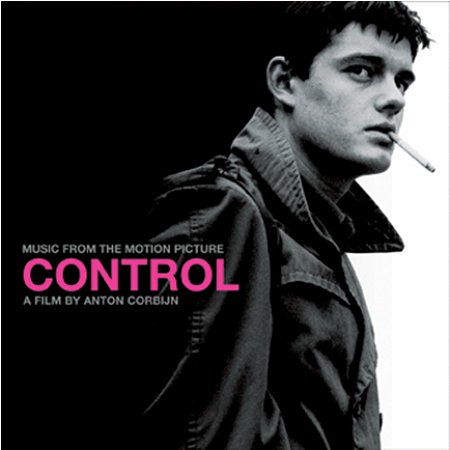
Control (UK, 2007)

Name: Control
Release Date: 2007
Director: Anton Corbjin
Writers: Deborah Curtis (book), Matt Greenhalgh (screenplay)

Cast:
Sam Riley: Ian Curtis
Samantha Morton: Debbie Curtis
Alexandra Maria Lara: Annik Honore
Joe Anderson: Peter Hook
James Anthony Pearson: Bernard Sumner

Harry Treadaway: Steve Morris
Craig Parkinson: Tony Wilson
Toby Kebbell: Rob Gretton

Run-Time: 122 mins.
Studio: Three Dogs and a Pony

This 2007 feature from the Dutch director/photographer Anton Corbjin traces the life of Ian Curtis, the moody and mysterious lead singer of the heralded English post-punk band, Joy Division, who took his life at the age of 23 in 1981 amid declining health, romantic, personal and professional troubles.

In their brief life, the Manchester, England-based four-piece released just two albums and a brace of icily gorgeous singles, including their immortal swan-song “Love Will Tear Us Apart.”

They were virtually unknown outside their home country, except to rock cognoscenti. But the superficial slenderness of their resume doesn’t do justice to the profound impact they had on the late 1970s/1980s music scene.

Curtis, along with bandmates Steven Morris (drums); Bernard Sumner (guitar) and Peter Hook (bass) made moody, atmospheric music that captured the nihilism and economic decay of late 1970s Britain.

In the studio, in the hands of producer Martin Hannett, the group’s most indelible tunes, such as “She’s Lost Control” (anchored by Hook’s hypnotic bass part and Morris’ frenetic drumming) became eerily atmospheric, marked by wide open spaces in the music. It’s not a stretch to say the songs were more than a little terrifying.

Live, they were loud and dangerous, sometimes almost veering into heavy metal/industrial territory.

At all times, the songs were anchored by Curtis’ sonorous baritone, an instrument that could veer –on a pinpoint — between gut-wrenchingly emotional and wildly angry.

Based on Curtis’ widow, Deborah Curtis’ 1995 memoir, “Touching From a Distance,” and a screenplay by Matt Greenhalgh, “Control” tells the late singer’s story, simultaneously capturing the tragedy of his demise and the transformational influence that Joy Division had on their era.

If you are a certain kind of rock fan, of a certain age, then the outlines of Curtis’ life are already well-known. For the uninitiated, it’s the story of an emotionally troubled boy marrying too young and dealing with the fallout from his early and dizzying success.

In the case of Curtis, it was falling in love with the Belgian writer Annik Honore, and then facing the gut-wrenching choice of his safe (but apparently unhappy) life with his wife or taking up with his new love. He chose the latter, leaving his wife and young daughter for the more exotic Honore (Lara).

Already emotionally fragile, Curtis also suffered epilepsy, which manifested itself in violent fits — sometimes on stage. He relied for treatment on a cornucopia of medications.

With his band on the verge of its first American tour and his domestic life in shambles, Curtis committed suicide by hanging in 1981, aged just 23, thus securing his entrance into that particular wing of the rock pantheon — the troubled genius who dies too young.

English actor Sam Riley is — you’ll pardon the expression — a dead-ringer for Curtis. He’s got the singer’s herky-jerky stage mannerisms down-pat. Ditto for Curtis’ expressive dark eyes, which, in Riley’s care, go from gentle and loving in one moment to wild and terrified the next. His performance is nothing short of heartbreaking — particularly since many in the audience already know this story’s tragic end.

And then there’s the music …

Riley and his cinematic Joy Division band-mates played their own instruments and supplied their own vocals for the film, producing versions of the real band’s songs that are all-but-indistinguishable from the originals.

Samantha Morton’s Debbie Curtis is never less than strong, loving and supportive. Nor is she particularly impressed by her husband’s musical success (“I still wash his underpants,” she wryly tells a friend at a party). But when she discovers his betrayal, the look of pain and numbing confusion that crosses her face fairly leaps off the screen.

Best known to American audiences for his iconic photography of U2’s 1987 smash “Joshua Tree” LP, director/photogrpaher Corbjin chose to film in black-and white.

It’s an appropriate choice. Precious little footage of Joy Division exists in color. The deep grays and overcast skies of northern England are perfectly suited to the medium. And, listening to the band’s songs, it’s hard to imagine that they belong to a world that was anything other than monochrome.

Four decades on from his death, Curtis remains as influential and inspirational a figure as ever. Echoes of Joy Division can be heard in such young artists as The Killers and Interpol.

The band that Curtis’ surviving bandmates formed from the ashes of Joy Division — New Order — is just as totemic (their own history was dealt with in the excellent “24-Hour Party People“). And their success eclipsed — but never diminished Joy Division’s. In fact, as the surviving band-members enter middle age, their awareness of their roles as the caretakers of that legacy has only increased.

As I noted earlier, if you’re a certain kind of rock fan of a certain age — that is, a sensitive one who came of age in the 1980s, and was prone to fits to what you believed to be poetic melancholy — then the chances are good that the songs of Joy Division were the soundtrack to a certain part of your life: the one that was halting and awkward and sometimes painful, that you wished would pass from you as quickly as possible.

Curtis never got the chance to see his way out of that period. But those of us who walked that path, and eventually left it, felt as if we had a companion, someone who was speaking just to us.

Posted in Biopic, drama, Music & Movies | 3 Comments

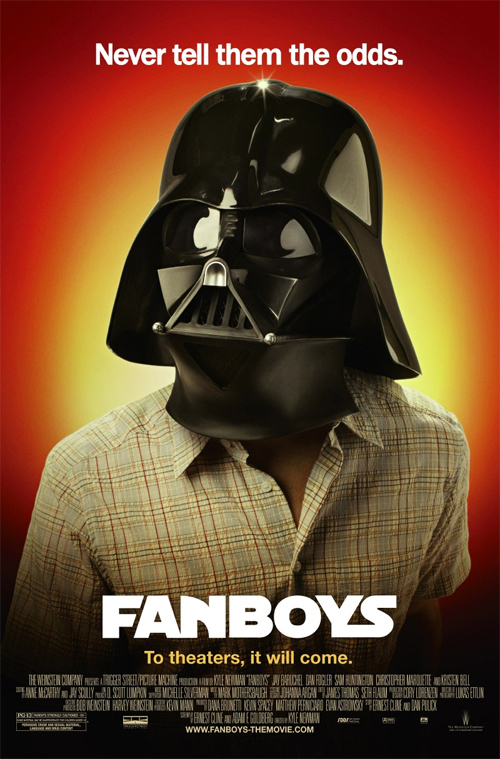
Fanboys (USA, 2008)

Name: Fanboys
Release Date: 2008
Director: Kyle Newman
Writers: Ernest Cline, Adam F. Goldberg and Dan Pulick

Cast:

Sam Huntington: Eric
Chris Marquette: Linus
Dan Fogler: Hutch
Jay Baruchel: Windows
Kristen Bell: Zoe
David Denman: Chaz
Christopher McDonald: Big Chuck

Charlie B. Brown: Myron

Run-Time: 90 mins.
Studio: Trigger Street Productions

As movies go, the plot to “Fanboys” is pretty straightforward: A bunch of “Star Wars” obsessives from Ohio cook up a plot to drive cross-country and steal a copy of “The Phantom Menace,” the 1999 prequel that introduced director/auteur George Lucas’ cinematic juggernaut to a new generation of viewers.

Scratch the surface, though, and what you get is a sweet-natured meditation on mortality and the choices foisted upon us by adulthood — liberally interspersed, of course, with boob and butt jokes and “Star Wars” references that come so thick and fast that they may leave the average viewer behind.

As the film opens, we meet Eric (Huntington), a responsible 20-something, dying a slow death as he toils in his father’s used car lot. He’s sacrificed his teenaged fandom and yen for writing comic books in favor of a stab at maturity.

Of course, he’s not really sold on the idea. And Eric’s efforts to convince himself that he’s happy are literally etched across his prematurely worried brow.

After some years absence, he’s reunited one night at a costume party with three of his closest friends: Linus (Marquette), Hutch (Fogler) and Windows (Baruchel).

Obsessed with Star Wars, Hutch and Windows are kitted out as Imperial Stormtroopers, while Linus wears a Darth Vader outfit.

In seconds, it becomes clear that they’re the kind of awkward man-children, caught in that phase somewhere between youth and adulthood, that’s so beloved of directors like Kevin Smith and Judd Apatow.

The fact that Windows is barely functional around women and that Hutch still lives in his mother’s garage (“A carriage house,” he insists more than once) are instant — if clichéd — markers of their charter membership in Geekworld.
There’s an immediate set-to with Eric, who lamely jokes that he’s come to the party dressed as a used car salesman. In the midst of the jibes, Linus’ PalmPilot beeps (hey, this is the late 1990s) and a countdown to the release of the first “Star Wars” prequel lights up the screen.

Linus, Hutch and Windows give Eric more grief about his embrace of adulthood and his decision to turn his back on their teenaged dream of driving across country to break into Lucas’ stronghold at Skywalker Ranch near San Francisco.

Before long, however, a confluence of events, including Eric being given the family business (and hence an endless life of peddling used cars) and the revelation that Linus is fatally ill, with only months to live, make the road trip a reality. The friends set off in Hutch’s van, airbrushed with an oversized likeness of the famed poster of the first Star Wars movie and the music of Canadian power-rockers, Rush, to keep them company.

The premise set, “Fanboys” turns into the standard road movie, replete with hilarious mishaps, including a run-in with a posse of rival “Star Trek” fans headed by Manchild-in-Chief Seth Rogen (nearly unrecognizable in a bad haircut and dental prosthesis).

Speaking of unrecognizable, there’s Zoe (Bell), who works with Hutch and Windows at a local comic book store. Here, Bell has traded her trademarked blonde tresses for a Goth bob.

And in the hands of the writers, Zoe every fanboy’s dream: the beautiful girl with an encyclopedic knowledge of sci-fi and comic books. She’s just plain enough to be accessible and just beautiful enough to be the girl most men aspire to meet. Of course, a romance flowers between Zoe and one of the male characters.

There are other classic road movie tropes — the celebrity cameos and walk-ons that bring to mind the great road movies of the late 1950s and early 1960s such as “It’s a Mad, Mad, Mad World” (still the all-time best). I won’t give any away. Just keep your eyes open.

By the third act, the crew (joined midway by Zoe) make it to Skywalker Ranch. The final scenes with the now-grievously ill Linus are particularly hard to watch, but have a sweet pathos all their own.

If you’re not a “Star Wars” fan, and weren’t in your middle to late-20s in 1998, it’s hard to describe the kind of obsessive excitement generated by the impending release of the first new film in the series for a quarter-century.

For those of us who grew up with the films, played with the action figures and memorized the dialogue, line for line (and I’m guilty on all three counts), it was a skip-school-call-out-from-work kind of anticipation that’s rarely rivaled by major life events outside of marriage and high school graduation.

So I couldn’t help but laugh out loud when Eric turns to his friends in the film’s final scene and gives voice to the fear that all of us secretly harbored at the time — “What if it sucks?

Because, for most of us, the second half of the trilogy doesn’t hold a candle to the first (Seriously, the Galactic Empire was started by a tax dispute? The only thing worse would have been if the Jedi and Emperor clashed over who was entitled to get a zoning variance to build a new deck).

Really, the part of the film that resonated for me was the depth of the bond between the male characters.

All of us remember the gang of guys we hung out with in college and high school — the shared jokes, the private language, the mutual obsessions over sports, movies and even (in the case of your humble ‘blogger) music and comic books.

And we all know what happens when we get handed the diploma, land the first job and meet the woman you end up marrying — inevitably, those relationships take a backseat. And, if you’re not careful, they wither and die from neglect.

So it makes sense when Hutch observes that the one moment Luke Skywalker would always remember was the destruction of the Death Star. It was, he argues, the craziest, ballsiest single act of his life.

Raiding Skywalker Ranch, he argues quite persuasively, is “The Death Star” moment for the quartet of friends — the one thing they’d talk about and relish in their old age.

All of us need that “Death Star” moment. And we need to grab it before our friends figuratively — or literally — leave us..

Posted in comedy, Guy Cinema, Our Films, Ourselves, Sci-Fi, slapstick | Leave a comment

The Rolling Stones, Live at the Max (UK, 1991)

Name: Live at the Max
Release Date: 1991
Directors: Noel Archambault, David Douglas,
Roman Kroitor, Julien Temple and Christine Strand.

Run-Time: 90 mins.
Studio: Promotour USA

When I was a freshman in college, an amazingly cool girl who lived up the hall from me lent me her copy of the Stones’ immortal greatest hits collection “Hot Rocks.”

The two-cassette set marked my first real exposure to the recorded oeuvre of Messrs. Jagger, Richard and company.

To put it bluntly, these first detailed listens of “Paint it Black,” “As Tears Go By,” “Can’t Always Get You Want,” and “Under My Thumb,” were a revelation. Sure, the songs were already classic rock radio staples. But in my heretofore sheltered existence, they had mostly passed me by. I made a copy in my old Radio Shack boombox and set about playing it into the ground.

At that point, in 1988, my only real, previous exposure to The Rolling Stones had been their 1981 LP “Tattoo You,” and the utterly overplayed “Start Me Up.”

These early singles, though, to my young ears, were dark, mysterious, and more than a little debauched. It sounds trite, but you felt like you were getting away with something when you listened to them.

Which brings me to the question that plagued me as I watched this document of the 1989 tour behind what was probably the last Stones record with any hint of creative spark, “Steel Wheels:.”

Namely, why do we need The Stones now? And what purpose do they serve in the artistic firmament.

By 1989, Keith Richards, Ron Wood, Mick Jagger and Charlie Watts were already millionaires many times over, profiting as they were from the Stones’ status as permanent nostalgia act with a patina of creativity.

And in those days, original bassist Bill Wyman was still in the fold — though in this film he’s standing so far from his bandmates that it’s clear he was already on the way out the door. Indeed, he would exit the band after the tour and go on to an artistic resurgence of his own.

Watching this movie now, it’s amazing how the Stones seemed less like the dangerous band of old than employees of a corporate behemoth called The Rolling Stones.

Recorded in London’s Hyde Park, each Stone occupies his own segment of the stage, faithfully and efficiently reproducing the guitar licks, drum fills and bass lines that have made the Stones’ tunes an indelible part of pop music. But if there is any joy in the doing of it together, it’s carefully concealed.

The revelatory moments come in the wry grins exchanged between Richards and Wood, who seem to be sharing some private joke of their own. Watts, serene behind his drum-kit, seems content to keep his own counsel.
<p.
Credit the intimate, but never intrusive cinematorgraphy, which puts the viewer on stage, close enough to see the ruffles in Jagger's increasingly ridiculous stagewear or the crinkles at the corner of Keef’s eyes.

Which is not to say that the songs do not have a vitality of their own. So practiced are The Stones in their art, and so deeply ingrained are these tunes in the minds of audiences, that we’ve heard them all before — even if, in the case of my 18-year-old self, you’re hearing them for the first time.

Whose heart doesn’t race a little at the cow bell clinks at the opening of “Honky Tonk Woman,” or feel the odd sense of melancholy brought on by the French horn line at the beginning of “You Can’t Always Get What You Want?”

And while there are those who would argue that The Stones’ last credible artistic statement was made with 1978’s “Some Girls” LP, let me take a second to argue the case for “Steel Wheels,” represented here with “Rock and a Hard Place.”

Listened to now, the record suffers from the same high-gloss production sheen that seemed to plague all late-1980s records. But with tunes like “Hard Place,” and “Mixed Emotions,” The Stones still sounded like a band that had something to prove, that was still trying to, if not match, than approximate their artistic highs.

True, the band produced new material after “Steel Wheels,” but I defy you to name any of the tunes or hum back a melody line. Mostly, they were pieces of cod-rock attached to greatest hit collections released in coincidence with tours aimed at getting the maximum number of asses in the seats.

I read the other week that the band are planning one, last massive tour to coincide with their 50th anniversary in 2011. Such an enterprise sort of beggars the imagination.

But wwith most of the combo cruising 70, or in the case of Watts, already on the other side of it, they must surely know that they have one hurrah remaining to them before “Paint it Black,” takes on an all-too-real meaning.

Which brings me back to the question I posed at the beginning: Why do we still need The Stones?

In their current form, I’m not sure we do. But in artifacts like this one, there’s a reminder that rock can still be dangerous, can still awaken the spirit and even shock an 18-year-old out his complacency.

And when the alternative is radio lite like Maroon Five or Katy Perry, let me be the first to encourage science to find a way to make Keith Richards live forever.

Posted in concert films, Guy Cinema | Leave a comment

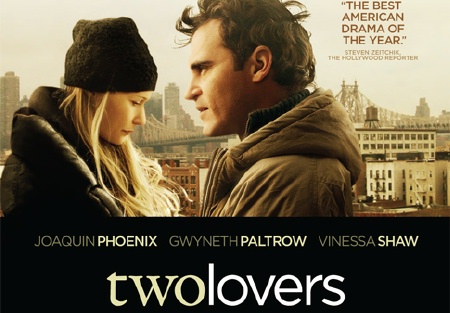
Two Lovers (USA, 2008)

Name: Two Lovers
Release Date: 2008
Director: James Gray
Writers: James Gray, Ric Menello

Cast:
Joaquin Phoenix: Leonard Kraditor
Vinessa Shaw: Sandra Cohen
Gwyneth Paltrow: Michelle Rausch
Isabella Rossellini: Ruth Kraditor
Moni Moshonov: Reuben Kraditor
Julie Budd: Carol Cohen
Bob Ari: Michael Cohen
Iain J. Bopp: David Cohen

Running-Time: 110 mins.
Studio: 2929 Productions

Here’s a reminder that the best dramas aren’t sweeping epics, but rather the tiny, quiet moments that make up a life.

Joaquin Phoenix, his eyes dark and haunted, plays Leonard Kraditor, a would-be photographer and full-time dry cleaner.

Broken and suicidal, Leonard lives with his immigrant parents (strong>Moni Moshonov and an unrecognizable Isabella Rossellini) in their apartment in Brighton Beach, Brooklyn. Early on, he claims the living situation is only temporary. But one very quickly gets the sense that, for poor, lost Leonard, that it may be impossible to escape the cosseted embrace of his Jewish parents.

In quick succession, Leonard meets Sandra Cohen (Vinessa Shaw), the dark-eyed, beautiful — and ultimately safe — daughter of his father’s business associate, and Michelle Rausch (Gwyneth Paltrow), a blonde free-spirit who’s just as damaged in her own way as Leonard.

Leonard embarks in relationships with both women. The coupling with Sandra is warm and loving. They meet on what amounts to a blind date, and she’s revealed to be the sort of girl that most men hope they’ll end up marrying.

Leonard is slower to convert his friendship with Michelle into a relationship — she’s involved with a married man. And there’s a palpable distance between her and real life that quickly indicates that she’s unattainable.

Often shot in low-light and at low volume, the screenplay by writers James Gray and Ric Minello throws into sharp relief the countless life decisions that face most people all the time. For one, do we live the life we think our parents want us to lead, or do we break free and try for the life we think we should have?

Menello and Gray reportedly based their screenplay on the Dostoevsky short story “White Nights,” and the parallels quickly show.

Set during a seemingly lifeless New York winter, Phoenix wears Leonard as if he has the weight of the entire world pressing down upon him. Every look is baleful and every movement is an effort. Relief comes through Paltrow, ethereal and blonde, and Phoenix’s character shows unexpected reserves of strength as he nurses her through the inevitable heartbreak of loving someone you can’t have.

Rossellini, as Leonard’s mother, is a revelation. Gone is the darkly mysterious glamor girl of “Blue Velvet.” In her place is a worried mother, her brow perpetually creased in concern for her lost, haunted son, as she wonders whether he’ll ever find real happiness. Moni Moshonov, as Leonard’s father, is the loving, but tough, Jewish dad. He wants his son to follow in his footsteps, and seems mystified by Leonard’s failure to follow the trail he’s so clearly set for him.

Though Paltrow brings great delicacy to her role, sadly, it’s the scenes between Leonard and Michelle where the film seemingly drags. It’s clear from the outset that the relationship between the two of them is doomed. Both are too trapped by their circumstances.

There’s a surprise twist at the end, where it appears that Leonard will take the easy way out of his situation. But the decision he makes on a darkened shoreline is the choice that confronts us all — do we let go of fantasy and accept life or do we let a bad decision swallow us whole?

Posted in drama, Uncategorized | Leave a comment