I’ve always been partial to the chase scene in “The Harder They Come,” which has Jimmy Cliff chasing someone while Toots & the Maytals’ “Pressure Drop” plays in the background.
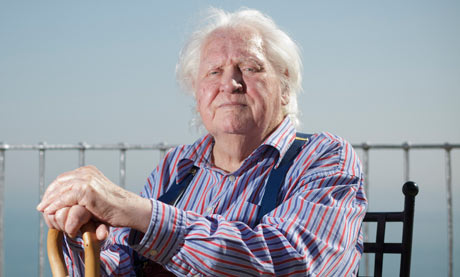
The famed British director has died, aged 84. Here’s his obit, courtesy of The Guardian.
“Ken Russell, the director behind the Oscar-winning Women in Love has died aged 84. Russell died on Sunday in his sleep, according to his friend, the arts writer Norman Lebrecht.
Known for a flamboyant style developed during his early career in television, Russell’s films mixed high and low culture with rare deftness and often courted high controversy. The Devils … a religious drama that featured an infamous scene between Oliver Reed and Venessa Redgrave sexualising the crucifixion – was initially rejected by Warner Brothers. It will be released in its entirety in March next year, 42 years after it was made, when it will form part of the British Board of Film Classification’s centenary celebrations.
Women in Love, released in 1969, became notorious for its nude male wrestling scene between Alan Bates and Oliver Reed, while Tommy, his starry version of the Who’s rock opera, was his biggest commercial success, beginning as a stage musical before being reimagined for the screen in 1976. But Russell fell out of the limelight in recent years, as some of his funding dried up and his proposed projects became ever more eclectic. He returned to the public eye in 2007, when he appeared on the fifth edition of Celebrity Big Brother, before quitting the show after a disagreement with fellow contestant Jade Goody.”
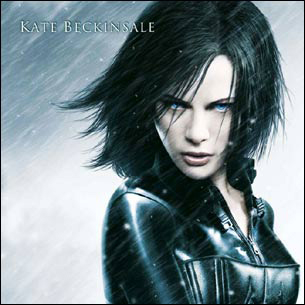
Since a picture speaks 1,000 words, I’m just going to get out of the way. The fourth installment of the werewolves v. vampires franchise hits theaters in January.
I haven’t talked much about this one, but I’m mildly curious about the upcoming adaptation of Edgar Rice Burroughs’ pulp character from his “Barsoom” series.
If your only knowledge of Burroughs comes from his better-known “Tarzan,” here’s a quick thumbnail:
“Barsoom is a fictional representation of the planet Mars created by American pulp fiction author Edgar Rice Burroughs, who wrote close to 100 action adventure stories in various genres in the first half of the 20th century, and is now best known as the creator of the character Tarzan. The first Barsoom tale was serialized as Under the Moons of Mars in 1912, and published as a novel as A Princess of Mars in 1917. Ten sequels followed over the next three decades, further extending his vision of Barsoom and adding other characters.
The world of Barsoom is a romantic vision of a dying Mars, based on now-outdated scientific ideas made popular by Astronomer Percival Lowell in the early 20th century. While depicting many outlandish inventions, and advanced technology, it is a savage world, of honor, noble sacrifice and constant struggle, where martial prowess is paramount, and where many races fight over dwindling resources. It is filled with lost cities, heroic adventures and forgotten ancient secrets.
The series has inspired a number of well known science fiction writers in the 20th century, and also key scientists involved in both space exploration and the search for extraterrestrial life. It has informed and been adapted by many writers, in novels, short stories, television and film.”
I first became acquainted with the character through the 1970s Marvel comic book series “John Carter, Warlord of Mars.” The film version, withTaylor Kitsch (X-Men Origins: Wolverine) starring as John Carter, hits theaters next March.
Oh boy … here’s one that’ll get the fanboys a-rioting.
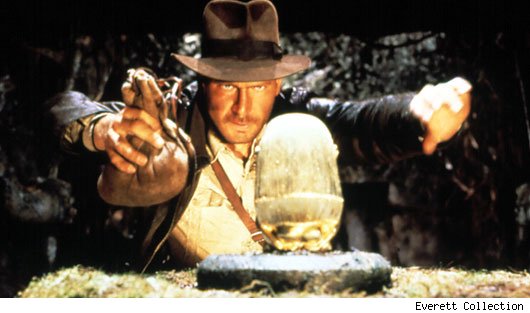
With the 30th anniversary of “Raiders of the Lost Ark” upon us, the folks at Hero Complex tackle a thorny question: Is the warmly remembered film of our youth actually hopelessly overrated? Is it one of those things (like “The Superfriends“) that is more often praised than rewatched? Or does Harrison Ford’s Indiana Jones really deserve his place among the great pulp heroes of the film pantheon (let’s face it — he’ll never be another Han Solo).
Here’s the nut graf:
“Until recently, I hadn’t seen “Raiders” all the way through since I was in college. Back then, the more brutal combat sequences (the fistfight, with wrenches and implied beheadings, underneath the Nazi plane; the protracted truck chase and vicious pummelings) seemed to go on an awfully long time. Second time through, they still do. The picture’s spirit strikes me as a little harsh for maximum enjoyment. This is why my favorite bit is the quickest, and cheapest, and funniest: Indy, faced with the Cairo street thug with the enormous sword, wearily pulling out his pistol and shooting the adversary dead. Heartless, perfectly timed, a sight gag that works.”
Here’s that scene, for those of you who have forgotten:
Writer Michael Phillips offers some other critical appraisals that might surprise you as well. For instance, here’s the late Pauline Kael (who also just got a reappraisal in the pages of the New York Times not long ago):
“The opening sequence, set in South America, with Indy Jones entering a forbidden temple and fending off traps, snares, poisoned darts, tarantulas, stone doors with metal teeth, and the biggest damn boulder you’ve ever seen, is so thrill-packed you don’t have time to breathe — or to enjoy yourself much, either .… Seeing ‘Raiders’ is like being put through a Cuisinart — something has been done to us, but not to our benefit.”
Which isn’t to say that everyone is a Grinch when it comes to this movie. Also in the L.A. Times, here’s part of writer Damon Lindelof’s protracted mash note:
“I could go on for pages about just the little things. Like the sound you make when Indy punches someone in the face. Or that Marion’s superpower is drinking. And don’t even get me started on the coat hanger. Where did that Nazi even get that thing? Did he special-order it? “I need somezing that vill terrify people when I take it out, but then give them a false zense of relief when I reveal it is simply somezing on vich to hang my coat.” Seriously. The best. But I know you’ve probably heard it all before and therefore, I’ll stick to the big stuff. First and foremost…
I love you because Indiana Jones is a nerd. Granted, a highly capable nerd who knows how to ride horses and fight real good, but still, at his core, Indy is an academic who’s motivated purely by his desire to find and retrieve really cool stuff so he can put it in a museum where other nerds can appreciate it. Also, he wears glasses and gets nervous when hot female students write the words “Love You” on their eyelids. Do you have any idea how much commitment is involved in writing “Love You” on your eyelids? It’s really hard! Not that I’ve ever done it.”
For me, the strength of “Raiders” has always been in the characters: Indiana Jones was the first tough smart guy I ever saw in the movies. Let’s take a moment to remember that his day job was as an archaeologist at a small Midwestern college.
There are few things nerdier than that. But put a fedora on his head and give him a bullwhip and that nerd could kick serious ass. I wouldn’t encounter someone both that cool and smart at the multiplex again until 1987’s “Real Genius.” Make no mistake, for a bookish, history-loving kid with only middling athletic skills, it was a huge inspiration.
And unlike any other of his leading ladies, Karen Allen brought a special mix of brains and beauty to the character of Marion. Here was a girl who could fight and drink and kiss with the best of them. What guy wouldn’t want to hang out with a girl like that? She was the only three-dimensional leading actress of the three movies. (Yes, three. I’m pretending that the fourth Indy movie doesn’t exist. Because, really, it shouldn’t).
The film was also a gateway drug for me to the great Republic serials on which it was based. At age 11, I had only the vaguest idea that these low-budget films existed. Like all great art, “Raiders” prompted me to go learn about what had inspired it. If you’re a true junkie, you always go tunneling back through history to find the source material.
And, finally, though it was addressed in a pulpy, History Channel reenactment kind of way, the first Raiders movie forced viewers to tackle questions of faith in a way that few films had before or have since.
As they chased after a golden box, both viewers and the characters were asked: What does it mean to believe? What does it mean to have faith (if you don’t have it, the answer apparently, is that you get your face melted off in the final sequence)? It takes a certain amount of belief to go chasing after quasi-mythic objects that exist only at the fringes of history and in our own imagination. If pressed, the viewer is asked, would you put that much faith on the line?
And have I mentioned that the movie was also a hell of a lot of fun to watch? And that it still is? There’s no more compelling argument for a movie’s continued relevance than that.
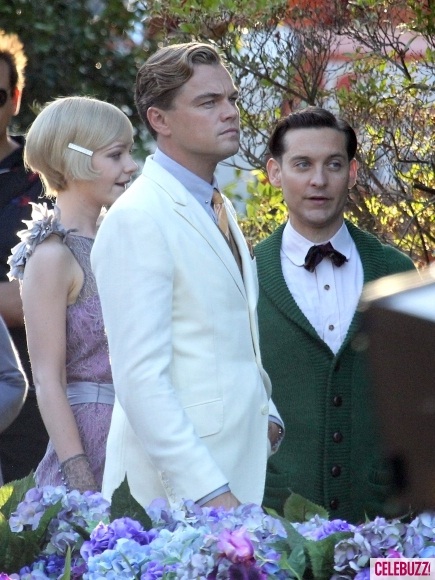
The stars of The Great Gatsby (l-r) Carey Mulligan, Leonardo DiCaprio, Tobey Maguire
With the release this week of new set photos of the Baz Luhrman-directed “The Great Gatsby” hitting the Web, I got to thinking about F. Scott Fitzgerald’s classic tale of The Jazz Age and why, despite the best efforts of some very talented filmmakers, it has seemingly defied adaptation to the big screen.
First, a bit of full disclosure: Of all the books in American literature, “Gatsby” is my most-beloved. I’ve re-read it every summer since I was 18 years old (2011 marked my 23rd consecutive re-reading, for those of you interested in statistics). And I never fail to take away something new from it.
I have friends who will tell you that they more closely associate me with the works of Ernest Hemingway — due, in no small part, to the shelves full of Hemingwayana and novels and short stories that fill my basement office. If they’re in a particularly generous mood, they may even tell you that my fiction and journalism resembles Hemingway’s as well. Or perhaps I’d like to think they’d be that generous in their descriptions.
But I don’t return to Hemingway’s work the way I do to “Gatsby.” I re-read “The Sun Also Rises” for the first time in years a couple of summers back. And while it was a great way to pass a couple of days on the beach, it did not resonate with me the way that the adventures of the damaged Tom and Daisy Buchanan, the dry and decent Nick Carraway and the ineffable Jay Gatsby still does.
I think that may be because, at its heart, “Gatsby” is a story about lost love and lost youth and all of us, somewhere inside us, still nurse that wound and maybe even hope, as Gatsby goes, that if we replicate the circumstances just right, that we can recapture that part of us we think we’ve lost and maybe even win back that lost love — or the way we used to feel when we were around that person.
And I think it’s because the novel looms so large on the psychic landscape for so many people that any filmed version of it is inevitably going to fall far short of expectations. No movie, in this case, hardcore fans will tell you, can ever be as good as the book.
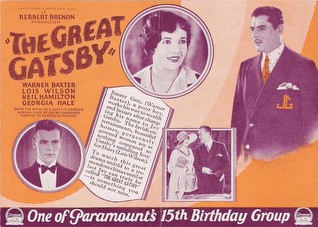
This trouble has existed since the beginning. A year after “Gatsby” was released in 1926, an all-but-forgotten silent version of the book was adapted for the big screen. It was rediscovered over the summer among a trove of films that were in such disrepair that they were in danger of vanishing altogether.
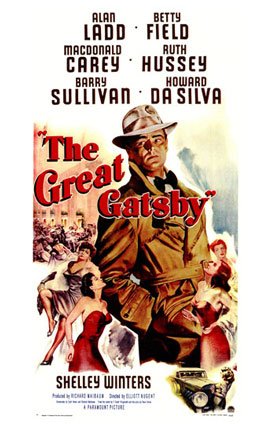
In doing the research for this piece, I also found a 1949 version of the book starring Alan Ladd, Betty Field, Macdonald Carey and Ruth Hussey among others. It was directed byElliott Nugent, who also directed several Bob Hope films including “My Favorite Brunette” (1947.)
This brief snatch of footage may tell you why the movie has eluded notice:
It was to take another quarter-century before someone tried adapting “Gatsby” for the cinema again. And the 1974 version, starring Robert Redford as Gatsby; Mia Farrow as Daisy and Sam Waterston as Nick, is the version that most people think of when they think of the book on the big screen.
I saw this movie for the first time as an undergraduate in the late 1980s. I was working in my college library and pulling shifts in the music-media room, a vast space where music and film students would occasionally come to check-out scores and movies that their professors had put on reserve for class. It was in the basement of the library and I was rarely disturbed. So with that much free-time at my disposal, I spent much of my sophomore year giving myself a crash course in the best of American and European cinema.
The 1974 version of “Gatsby” was among the films on permanent reserve and being an English major with a burgeoning (and still alive and well) obsession with The Lost Generation, I felt like it was something that I had to see. I’ve had a love-hate relationship with the movie ever since.
Waterston’s portrayal of the dry and disengaged Nick is note-perfect and though I didn’t like him originally, I’ve come to like Redford as Gatsby, he brings an affability to a character who sometimes defied likeability (though he is always sympathetic). But I could not then — and still cannot now — abide Farrow’s performance as Daisy, which still strikes me as fatuous and overplayed.
And every time I hear Farrow trill, “I’m positively overcome by happiness,” upon seeing Nick at dinner in the film’s opening act, I must repress the urge to throw something at the screen.
For reasons that confound but please me, the YouTube gods have not purged parts of the film from their servers. So here’s part of that opening section:
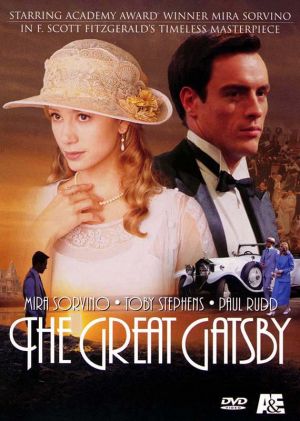
It would take another quarter-century still for someone to take another crack at trying to bring “Gatsby” to life on the big screen. And maybe the folks at A&E and the BBC should have left well-enough alone. The 2000 version starred Mira Sorvino as Daisy; Paul Rudd as Nick and Toby Stephens (Who? Exactly.) as Gatsby.
Rudd, who’s gone on to justified acclaim as a comic actor, brings nothing to Nick. I can’t even tell you one thing I remember about Stephens as Gatsby. And the only thing I can say about Sorvino’s performance as Daisy is that she channels a watered-down version of Farrow in much the same way that Brandon Routh unsuccessfully tried to step into Christopher Reeve’s tights in the forgettable “Superman Returns.”
So that brings us all the way around to the 2011 version. I’m looking forward to seeing Mulligan as Daisy. Her performance in last year’s “Never Let Me Go” was positively mesmerizing. I’m nervous about DiCaprio as Gatsby. I know he’s grown as an actor, but I have never been totally sold on his skills. Maguire may well bring the requisite wide-eyedness as Nick. But I fear that, with the 1974 film looming so large, that the leads may try to ape the performances of their elders.
The tropical climes of Australia are being asked to stand-in for Long Island, which could be problematic if the stray palm finds its way into the shot. And no one has explained why Luhrman felt obligated to shoot the movie in 3D — unless he’s hoping for a particularly evocative green light at the end of Daisy’s dock or intends to make the disembodied eyes of Dr. T.J. Eckleburg especially phantasmagoric.
The problem with Gatsby-On-Screen, as I see it, is that no director or camera can really do justice or bring to life Fitzgerald’s vivid prose. The language and vocabulary that he created for the book is so carefully wrought and intricate that the mental picture it creates can’t be topped by the camera.
For instance, why get DiCaprio when you have this?
“Most of the big shore places were closed now and there were hardly any lights except the shadowy, moving glow of a ferryboat across the Sound. And as the moon rose higher the inessential houses began to melt away until gradually I became aware of the old island here that flowered once for Dutch sailors’ eyes – a fresh, green breast of the new world. Its vanished trees, the trees that had made way for Gatsby’s house, had once pandered in whispers to the last and greatest of all human dreams; for a transitory enchanted moment man must have held his breath in the presence of this continent, compelled into an aesthetic contemplation he neither understood nor desired, face to face for the last time in history with something commensurate to his capacity for wonder.
And as I sat there brooding on the old, unknown world, I thought of Gatsby’s wonder when he first picked out the green light at the end of Daisy’s dock. He had come a long way to this blue lawn, and his dream must have seemed so close that he could hardly fail to grasp it. He did not know that it was already behind him, somewhere back in that vast obscurity beyond the city, where the dark fields of the republic rolled on under the night.
Gatsby believed in the green light, the orgastic future that year by year recedes before us. It eluded us then, but that’s no matter – tomorrow we will run faster, stretch out our arms further… And one fine morning –
So we beat on, boats against the current, borne back ceaselessly into the past. “
Honestly, that’s good enough for me. But I wish Lurhman luck. He’s going to need it.
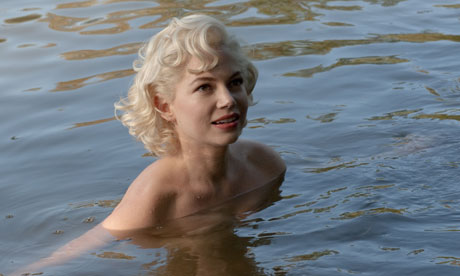
Actress Michelle Williams as Marilyn Monroe in "My Week with Marilyn."
Writing in The Guardian This Morning …
… critic Alex von Tunzelmann gives the new Michelle Williams film (already being touted as Oscar-bait for the talented actress) a grade of C+ for its historical accuracy.
For those not in the know, the movie is based on the memoir of the British documentarian Colin Clark, who worked as an assistant to Sir Laurence Olivier on the 1956 film “The Prince & the Showgirl,” which also starred Monroe. With the principals safely in the next life, there’s no one left alive who can confirm or refute Clark’s claims.
Here’s the nut graf:
“Historically, the film’s main problem is that its source for the alleged Clark-Monroe liaison is Clark’s diary. In the film’s key sequence, Monroe takes too many pills, locks herself in her bedroom, and collapses. Clark climbs in through the window. He refuses to open the door to her worried friends, asserting that he is the best person to look after her, and says he will sleep on the sofa. Instead, he gets into bed with the woozy and incoherent woman and starts telling her he loves her. According to him, that’s as far as it goes – but Monroe can’t remember anything the next morning, so you’ve only got his word for it. Clark’s diary and the movie present this as a loving and quasi-heroic attempt by Clark to “save” Monroe. In fact, it’s creepy. Disquietingly, the film doesn’t question Clark’s version of events, though a lot of it can’t be verified and sounds like self-serving fantasy. For all his talk about wanting to protect Monroe, is it protecting her to sell your story – twice – when she’s dead and can’t answer back?”
“Marilyn even flounced off one time from the set and went back to her caravan and wouldn’t come out after a dispute between her and Sir Laurence Olivier. He was old school, and she was this brash American woman who was discounting everything he’d said. There was one scene where Marilyn said, “I just don’t ‘see’ it,” and Sir Laurence Oliver said something like, “Stop saying that, and just say the bloody line!” That was a little bit embarrassing for her. And there was one scene in the abbey where she needed 30 takes to do just one line! She was pretty unprofessional, but when she “got it” and did the scene right, she just came alive and was fantastic. She’d get that look in her eye like, “Ah!” and then the rest of the cast would be like, “Ah, thank God she’s got it!”
If nothing else, the conflicting accounts are a reminder that memory is a slippery thing and that no two people remember the same event the same way.
There’s a pair of fascinating Black Friday reads in The Guardian this morning.
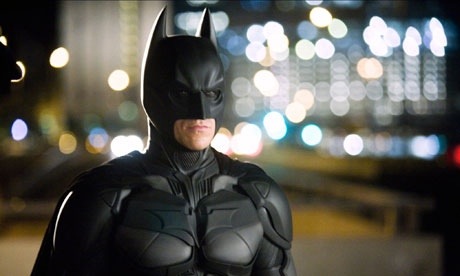
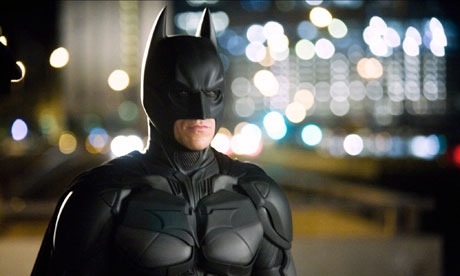
In the first, film critic Ben Child goes inside “The Dark Knight Rises,” to consider what the film might hold if — as director Christopher Nolan claims — it is set eight years after the events of the last movie.
Here’s the nut graf:
Exactly how badly off is Batman in the new film? Might he be returning after a lengthy lay-off? Or is he injured early on in the movie? Gary Oldman, who plays Commissioner Gordon, described the film this week as “epic”, so it’s possible the movie takes place over a number of years, or utilises flashback sequences to show us what’s been happening since the last time we saw Batman on screen. We know that Liam Neeson has shot scenes for the film as the supposedly dead Ra’s al Ghul from Batman Begins, so such an approach doesn’t sound too far out.
Elsewhere in the newspaper, author Rick Moody turns in an essay explaining why no one should be surprised by comic author Frank Miller’s toxically hostile reaction to the #Occupy movement and how it fits in with the generally conservative bent in of action movies generally (and Hollywood, in particular.).
Here’s the nut graf:
And yet with action films, the moral and political ideas in play are surpassingly easy to spot. What about the entertainment films that came later, during the era of CGI – the big-budget films primarily generated from more imaginary fare, such as the apparently numberless comic book franchises of Batman, Spider-Man, Iron Man, Daredevil, Fantastic Four, X-Men, Captain America, et al? In these cases, the moral framework of the product is just as simplistic as in action films, if not more so, and the triumph of the social order is just as violent, and just as relentless, though the films are couched in a sugary glaze of graphics and “wow” moments that distract from ideological branding. The CGI sheen is seductive enough that it’s sometimes difficult to divine the message at first. You are too busy being bludgeoned by the sounds and lights. Nevertheless, the message is there. Might is right, the global economy will be restored, America is exceptional, homely people deserve political disenfranchisement, and so on. It bears mentioning that these are films that are in many cases being marketed to children. When I was a kid, you could not gain admission to a film such as Dirty Harry or The French Connection. But an American adolescent can now see Batman in The Dark Knight, rated PG-13, without much difficulty.
It tells you everything you need to know …
… about the state of contemporary cinema that filmmakers are looking back longingly at an era when Hollywood actually seemed to be in the business of making myths and not cynically churning out safe, tentpole franchises.
That may be an unnecessarily rosy eyed view on Tinseltown — they do call it show business after all. But as they look backward for inspiration, one can’t help but feel that moviemakers are trying to commune with something they think the’ve lost.
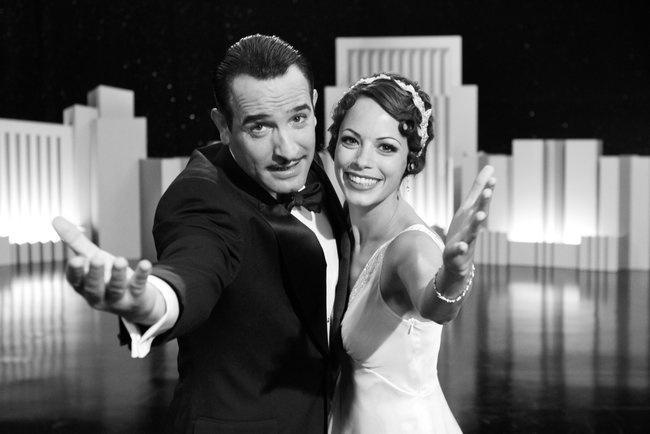
Writing in The New York Times, film critic A.O. Scott takes a look at “The Artist”, which he describes as an unbridled bit of “movie love.”





 The Cineaste's Lament.