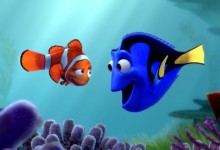
“After The Lion King 3D did tremendously well at the box office towards the end of last year, Disney and Pixar announced that they would be bringing back four from their collection – two each – to the big screen in 3D.
Kicking things off will be Beauty and the Beast, which the States are set to get this coming weekend – alas, I think we have to wait until May in the UK – and then following towards the end of the year will be Finding Nemo, and DisneyPixar’s YouTube have just put up the first trailer for the re-released film. After Finding Nemo is re-released, we can then look forward to seeing Monsters, Inc. and The Little Mermaid in all new dimensions next year.”
Filmed offerings of the bloody conflict that consumed nearly an entire generation of European young men include “The Four Horsemen of the Apocalypse” (1921); “”The Big Parade” (1925); “Wings” (1927) and, of course, “All Quiet on the Western Front” (1931), which is probably the best war movie ever made — hands down.
The guide is hugely instructional and it’s a reminder not to forget a conflict that, though it’s rapidly receding into history, still holds lessons for us now.
Monty Python alum Terry Gilliam has a new short film “The Wholly Family” that’s due to hit the Web on Jan. 23.
The Guardian reports:
“It hasn’t been that long since Shane Meadows made a short feature with commercial sponsorship; Eurostar stumped up the cash for his dramaSomers Town, and the company was rewarded with very prominent branding and plot involvement. Not everyone was thrilled that a film-maker should take the commercial shilling. My colleague David Cox sharply pointed out that Eurostar’s corporate practices were given a rosy fictional glow.
Now Terry Gilliam has moved into this arena with a new 20-minute short film, to be distributed online. It has been entirely funded by the Garofolo Pasta company, an Italian firm based in Gragnano near Naples, where the film is set.”
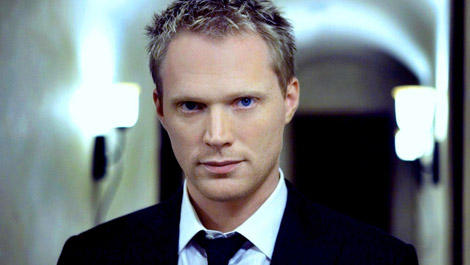
The English actor, who provides the voice of the digitized butler JARVIS in Joss Whedon’s superteam flick, dishes to TotalFilm, about, among other things, forgetting that he was in “Iron Man.”
“I forgot I was in Iron Man,” reveals the British star. “Someone said, ‘I loved you in Iron Man’. I said, ‘You’ve got me mixed up with someone else.’ I forgot I did the voice because it was only 30 minutes in a recording studio laughing my arse off!”
And as for his work on The Avengers, Bettany isn’t afraid to admit that it was the easiest money he’d ever made.
“I have no input with [The Avengers] other than spending half an hour sitting in a studio doing the voiceover,” he explains. “It’s the best job I’ve ever had. I say the lines and they pay me money.”
Courtesy of Brit film site HeyUGuys here’s “Hunger Games” stars Jennifer Lawrence and Josh Hutcherson in their official “Hunger Games” duds. The movie is scheduled to open March 23.
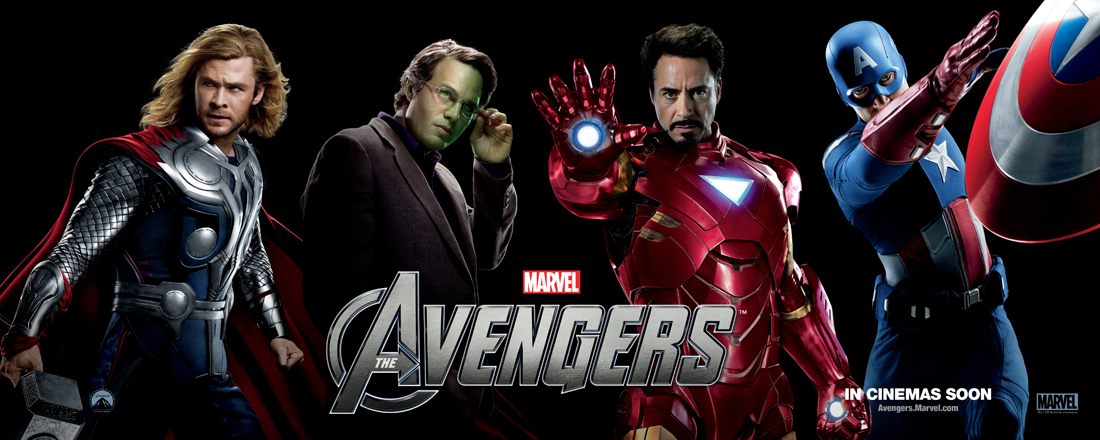
With the buzz continuing to build for director Joss Whedon’s superhero flick, the good folks at TotalFilmhave put together a cheat sheet of everything you need to know about the Marvel Comics’ property.
For instance:
“The Avengers comics were a series created by Stan Lee in 1963, designed to group Marvel’s top superheroes together and tap into the success enjoyed by DC’s Justice League Of America franchise.
The original lineup, dubbed “Earth’s Mightiest Heroes” consisted of Iron Man, Wasp, Ant-Man and Thor. Captain America was discovered by the team in issue 4, where they found him trapped in a block of ice. “
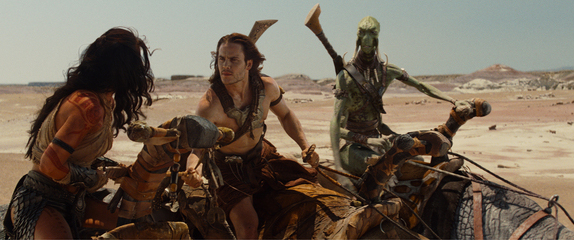
Namely, will it be a hit/ Will audiences plunk down their $7.50 or $9.50 or $1,423.57 (if it’s in 3d) to see the big-screen adaptation of a character that was hip during their great-grandparents’ time and has largely been forgotten until now?
Here’s the nut graf detailing what’s at stake with the $250 million film:
“A film of this size and scope typically requires a marketing budget of roughly $120 million, adding to the price tag.
All eyes are on Disney to see if the studio can turn the lead character from Edgar Rice Burroughs’ once beloved, now largely forgotten 11-volume Mars series into a $700 million blockbuster. Its director, Andrew Stanton, admitted to the New Yorker in October, that it will have to gross that much worldwide to justify a sequel.
That’s more than “The Twilight Saga: Eclipse,” “Pirates of the Caribbean: The Curse of the Black Pearl” and “Iron Man” have banked during their theatrical runs.
Only one March release, “Alice in Wonderland,” has ever exceeded that benchmark, and it was able to rack up over $1 billion globally thanks in no small part to the combined talents of Johnny Depp and Tim Burton.”
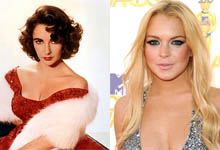
One of these things is not like the other (HeyUGuys, photo)
You’ve got to hand it to the star-crossed actress, she does have an appreciation for classic Hollywood. First she channeled Marilyn Monroe for her recent Playboy spread. Now this:
“Today, Deadline [is] reporting that Lindsay Lohan is in talks to play Elizabeth Taylor in the new movie, Elizabeth & Richard: A Love Story which focuses around the love affair between Elizabeth Taylor and Richard Burton. It sounds to me like their relationship would have ended up in various gossip magazines if it were to happen today but according to Deadline, their relationship was one of ‘the most fiery romance was the most notorious, publicized and celebrated love affair of its day’, alas I’m not too up to date with Hollywood relationship gossip from the 60s and 70s.”
The blonde hair will have to go, of course. But I’ve always thought Lohan was prettier with her real red hair, anyway.
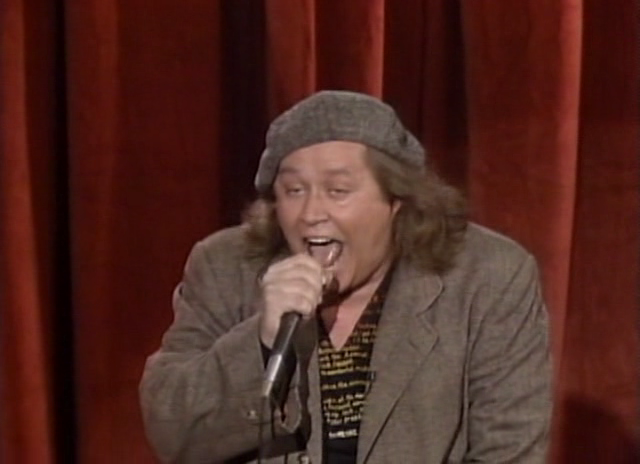
The late Sam Kinison, in performance, probably around 1987-1988.
Where have all the comedians gone?
I bring this up because the other night I was watching “Man on the Moon,” the 1999 biopic of the late Andy Kauffman, starring Jim Carrey as the improv comedian.
If you only know him through his role as the lovably goofy Latka Gravas on the 1970s/80s sitcom “Taxi,” it’s difficult to explain just how dangerous and innovative a comedian Kauffman really was.
Consider for a moment that this was a guy who would routinely incite audiences just to get a reaction out of them. He would, for instance, punish uncooperative audiences by reading “The Great Gatbsy” to them. Not just an excerpt — the whole book — until he drove them from the theatre.
You won’t see that on the current iteration Saturday Night Live — where Kauffman famously debuted with his rendition of the “Mighty Mouse” theme.
Here’s Carrey, as Kauffman, reenacting that famous scene:
Which is not to say that the current cast of SNL isn’t doing some good work. Tina Fey’s dead-on impersonation of political personality Sarah Palin during the 2008 presidential campaign is a recent high-water mark.
But it’s been years since stand-up comedians such as Kauffman, George Carlin, Steven Wright, pre-crack up Dennis Miller, Dennis Leary and the late Bill Hicks, for instance, made us believe that a guy with a microphone, telling jokes, could challenge the established social order.
Here’s the sketch. You might want to send the kids out of the room for this one.
For about 10 years, say from about 1975, when the original SNL debuted, to about 1987 or 1988, stand-up comedy enjoyed a golden age. HBO was airing comedy specials like crazy. Clubs were popping up all over the place. And performers with rock star status were parlaying club gigs into lucrative television shows.
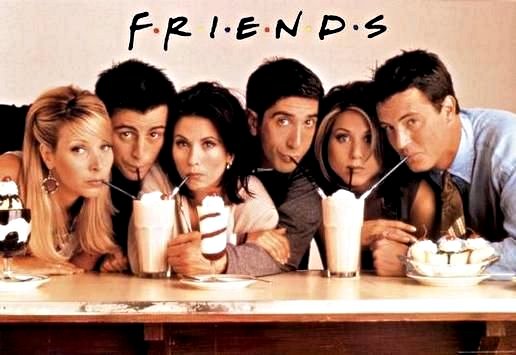
With the death of Kinison, comedy went into another phase. I’ll call it “The Seinfeld Years,” where genuinely challenging comedy was replaced with genial, observation humor that, while funny, was guaranteed to offend almost no one. That period lasted through much of the 1990s and breathed its last when “Friends,” which limped across the finish line in 2004.
These days, it’s almost impossible to find stand-up comedy on premium cable. HBO still airs specials. But these are by top-line stars such as Bill Maher and the inexplicably famous Dane Cook. The days of Rodney Dangerfield hosting a “Young Comedians” special are gone — unless you happen to catch a rerun on HBO’s specialty comedy channel.
And the sitcom? The medium’s on life-support. To be sure, some of the current crop of shows are trying hard. And yes, I’m looking at you: “Big Bang Theory,” “Two Broke Girls,” and “How I Met Your Mother” (saved, as it is, by the feral performances of Neil Patrick Harris).
But all are working within the confines of the four-camera, three-act sitcom. Those that hew most closely to the formula: Tim Allen’s “Last Man Standing” and the post-Charlie Sheen “Two and a Half Men” seem like relics of an earlier era — “The Honeymooners” with boobie and toilet jokes.
When comedy succeeds on TV now it’s in those instances — “The Office,” “Parks & Rec,” “30 Rock,” when it dispenses with the old playbook and the horrid canned laughter. I’m still disappointed that “Mr. Sunshine,” Matthew Perry’s post-“Friends” return to comedy wasn’t given a chance to find its feet. It fit right in with those more innovative shows.
Fortunately, there is some reason for optimism: And it comes from Comedy Central, where both “The Daily Show” and the “Colbert Report” are offering the sharpest social commentary around. Ditt for “Real Time,” the Bill Maher-starring series on HBO, where policy-makers and politicians discuss the issues of the day.
I realize that I’m not offering a particularly penetrating insight here. Minds far sharper than my own have expended endless column inches on the cultural and political influence exerted by these two shows.
But Stephen Colbert has taken it up a notch of late, forming a political action committee that’s solicited donations and gotten actively involved in the process — even going so far as trying to buy the naming rights to the 2012 South Carolina Republican presidential primary.
Here’s a commercial that Colbert’s PAC, “Americans for a Better Tomorrow, Tomorrow” ran in advance of last August’s Ames straw poll in Iowa.
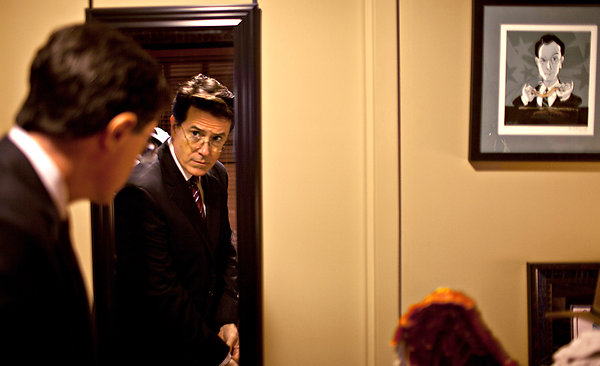
“The new Colbert has crossed the line that separates a TV stunt from reality and a parody from what is being parodied. In June, after petitioning the Federal Election Commission, he started his own super PAC — a real one, with real money. He has run TV ads, endorsed (sort of) the presidential candidacy of Buddy Roemer, the former governor of Louisiana, and almost succeeded in hijacking and renaming the Republican primary in South Carolina. “Basically, the F.E.C. gave me the license to create a killer robot,” Colbert said to me in October, and there are times now when the robot seems to be running the television show instead of the other way around.
Stephen Colbert gets into character (New York Times photo).
“It’s bizarre,” remarked an admiring Jon Stewart, whose own program, “The Daily Show,” immediately precedes “The Colbert Report” on Comedy Central and is where the Colbert character got his start. “Here is this fictional character who is now suddenly interacting in the real world. It’s so far up its own rear end,” he said, or words to that effect, “that you don’t know what to do except get high and sit in a room with a black light and a poster.”
In using a fictional construct to expose the very seamy and very real underside of our political process, I can’t help but feel like Colbert is ripping a page from the Kauffman playbook. And trained by two generations of comedians to accept irony as their default, audiences are getting the joke the first time around.
And while we may never get that Golden Age back — that is why they’re golden ages, after all — we may be enjoying the next best thing: a renaissance. And were he still with us, that’s something Andy Kauffman might appreciate.







 The Cineaste's Lament.